

“Are your ears awake? Listen. Listen to the Wind Words, the Spirit blowing through the churches.” — Revelations 3:22
Fall | Oct 2026
This is not a click-bait title, I promise.
This sets the back drop of Eight Parables’ strategic direction going into 2027 and beyond, as we close out the funding of our existing work at a time of AI closing in to sharpen our funding priorities.
Most of all, in an era of AI, we are doubling down on being with people.
From the genesis of Eight Parables, if you’ve been with us since 2019 our first production set of Dirty Laundry, it’s the gathering of the crew to make a film that made what we are. This is the true scale.
The real challenge, I think, it’s going to be humans who can manage the speed of scale with AI, and that takes a lot of unlearning. It is less about things have to move fast but rather humans are not going to out-perfect AI and the need to let go of a brand of perfectionism to “just do it” more than ever.
Go outside. Make new friends. Make things together (yes, it will be messy).
But that’s the point.
At this juncture, I have explored a wide range of AI capabilities in filmmaking (cues: China) and I don’t really think AI is the issue — it’s an insanely good tool.
The issue will be people resisting the messiness of working with, well, people.
That’s the true lure of AI. And the only thing that, I think, can possibly keep a boundary from AI reliance is being so cleared-eye about its harmful shortfalls.
With our first pillar on Redemptive AI, we are currently partnering with our friends at Tribela to champion their work. We experimented with them this Spring to produce a couple of university town halls that I learned a ton from.
That’s the first purpose of it, bringing people outside and together to learn.
Where the educator in me meets the producer in me.
Our digital series Gamified simply came from packaging our live town halls (not too different from studio shows I’ve done other than no live feed phew!)
This series is mainly content for the youth edutainment ecosystem that Tribela, a youth-safe social network app (download free on iOS), is building.

Why a series on AI and algorithms? One of the leadership mistakes I’ve made is assuming everyone knows what they are doing, or up to speed with where trends or industries are headed, and I’ve made costly mistakes along the way.
Course-correcting is very challenging when you are knee-deep in a product. One of the leadership lessons, as someone who’s of the “good faith” sort, I’m slow learning to question-and-listen before jumping on board a new project.
Still not great at it but just falling a bit more gracefully each time if you may.
I am seeing AI-generated work sneaked in everywhere, and I am OK with that if the person behind that can also execute the work without AI (which often is where the friction happens because AI overpromises for its humans — making many sound a lot more competent than they really are).
When the project goes on, true colors come out? This is probably where the main frustration the fixer in me have with AI right now across levels of work I am in. Can humans really deliver on what their AI claims they are capable of?
I think that’s where the temptation lies: That human need for perfection (or sounding perfect) that AI so generously offers calls for a self-editing to sound less perfect? It’s like putting up a mask or image management, it creates this horrible reliance where humans need it to keep faking it to stay in the game.
Know Thy Enemy?
The path for Redemptive AI may be found in like any vices in this world, for self-control to be exercised over AI is to be well-aware of its harms for now.
As I’ve said earlier, and maybe I am already overstating the obvious hah, but AI is a genius of a tool that solves a ton of pain points in the film or creative production process. In many ways, I will argue it’s for the better than worse. Again, the underlying issue, is on humans to overcome our reliance of it.
It’s ultimately also good, but not great. (Hence my title: very good films.) Even as it’s said in life or business, good is the enemy of great, I’m less sure where this will land in an AI age. With technological advancement, while there is a premium on handmade vs. mass production, the latter is the accepted norm.
Particularly where the film industry will be disrupted by AI (if it isn’t already) is in two areas: production budgets and distribution power will see big shifts.
From Curry Barker’s “micro-budget” Obsession blowing up the box office to Markiplier’s Iron Lung went complete indie rogue. The math isn’t math-ing?
That may be the AI conspiracy where the industry is signaling equivalence of mass production acceptance. And where that changes for film is, the same way in many great things may be reduced to good’ol days nostalgia or reminiscence.
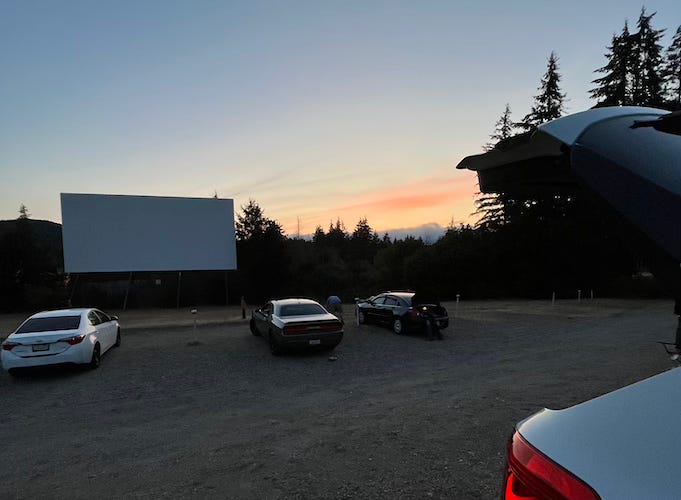
Time will tell.
As we await though, I’ve written in my earlier Founder Letter, I’m betting on others, or people. Like our Redemptive AI pillar where we partner, convene, educate, our Psychology and Theology pillar is likewise about partnerships to educate (we are ideating on convening too). This Fall, we just launched with our Australian partner, Life To The Full, a pilot series of The Shrink.
The first four episodes are now live, with two more to round up the series by end of this month, part of holding up World Mental Health Awareness Day on Oct 10. In the next Founder Letter, more to share on a Psychology and Theology work with an American partner in 2027!
For & Other Love Stories, we are very close to locking our story direction for our third and final ‘Love Parables trilogy’ short film! Hoping to get a first draft script of sorts by December-January and begin crewing for a 2027 production.
Meanwhile, I’ve been both swamped and thrilled to head into November to pilot our parabolic feature film screening indie distribution partnership. More details to share very soon. But this all came together like a whirlwind or wind words written of in Revelations. To this, I will just say, whoever has ears, hear.
Stay tuned!
